


- The U.S. shale industry’s long streak of “doing more with less” may be running out of road. Kayrros geospatial data show that reductions in drilling and completions activity in the Permian basin are now outpacing efficiency gains, raising questions about the sustainability of U.S. production growth.
- After years of technological breakthroughs—longer laterals, faster drilling, and higher footage per day—output has remained resilient despite fewer rigs and frac crews. But since early 2025, the balance has shifted.
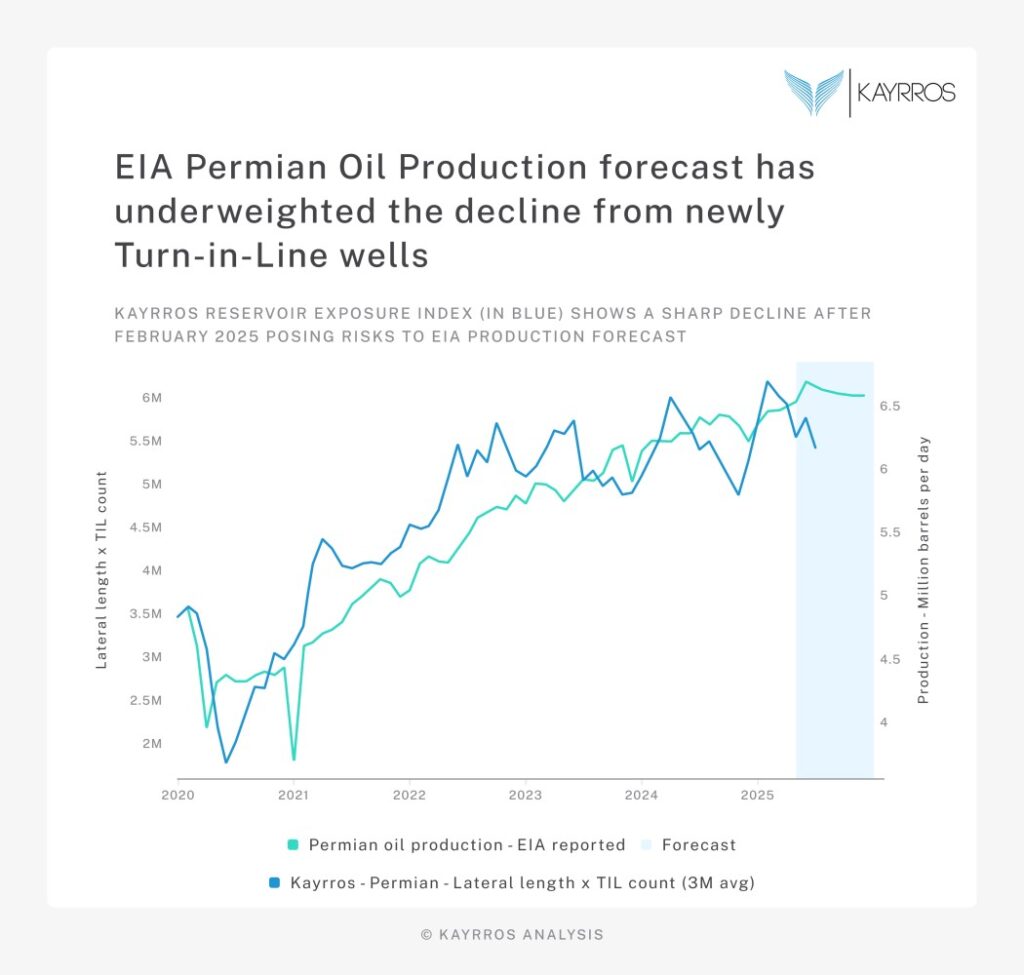
- Kayrros’ Reservoir Exposure Index (well count × lateral length) has fallen sharply since February 2025, signaling reduced production capacity.
- Historically, similar declines have preceded basin-level output drops. Yet the U.S. EIA forecast still shows production holding flat through 2026, a view our data suggest may underestimate the actual slowdown.
- Rig and frac activity, after a brief uptick early this year, are now at their lowest levels since the post-COVID recovery. Frac crews are down more than 20% since February, while drilling rigs have fallen 7%. The number of wells put on production has dropped nearly 12% since Q1.
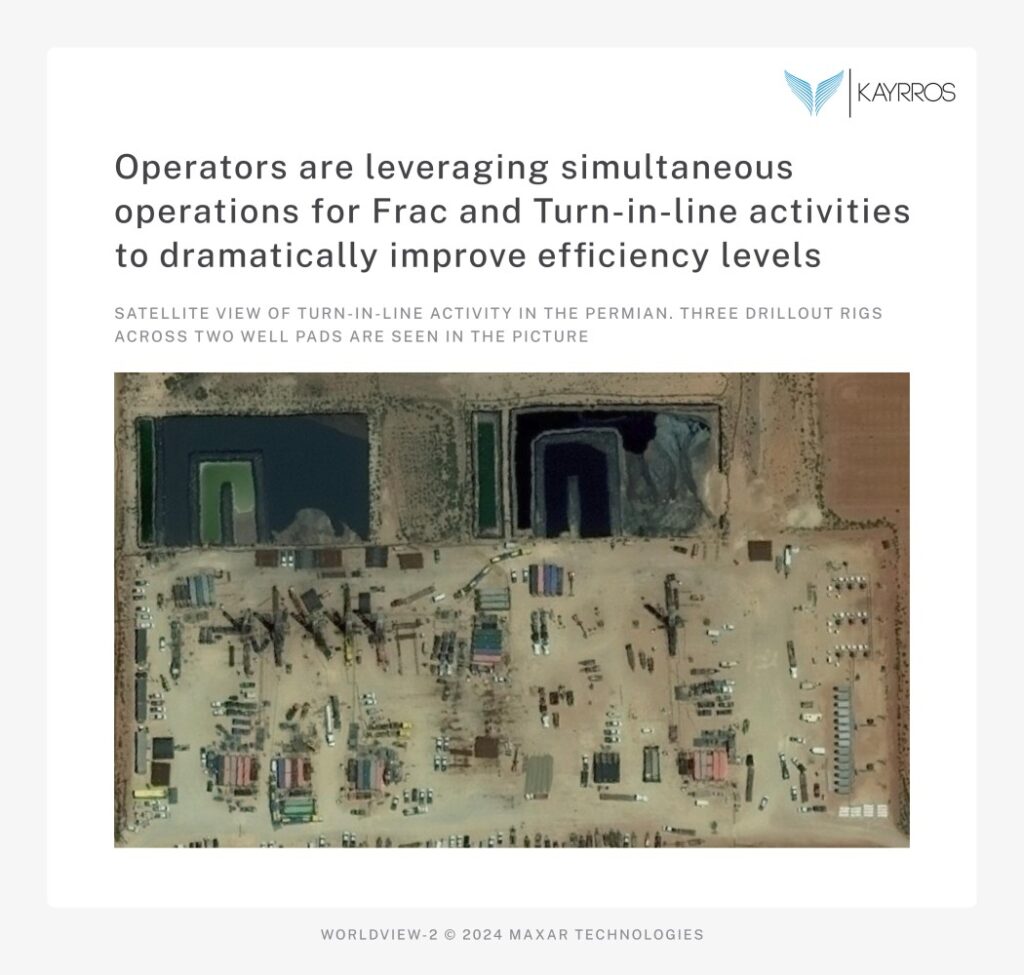
- While drilling efficiency improvements show signs of plateauing, advancements in multi-well frac give operators runaway to continue. But are they capable of offsetting the decline in new well activity?
In the news
- EIA forecasts a drop in US crude oil production in 2026 (FT)
- OPEC+ production hikes increase risk of oil market imbalance in H2 2025 (Bloomberg)
- Crude calendar spread options open interest spikes (Bloomberg)
- EIA Short-Term Energy Outlook, Release Date: October 7, 2025
Want the Full Analysis?
Our fully released report takes a deeper look at:
- Why the current slowdown could hit Permian production sooner than EIA expects.
- How Tier 1 acreage depletion is reshaping well productivity trends, and
- What scenarios could still avert our projected decline on Permian oil production.