


From boom to uncertainty: The U.S. solar market faces a turning point
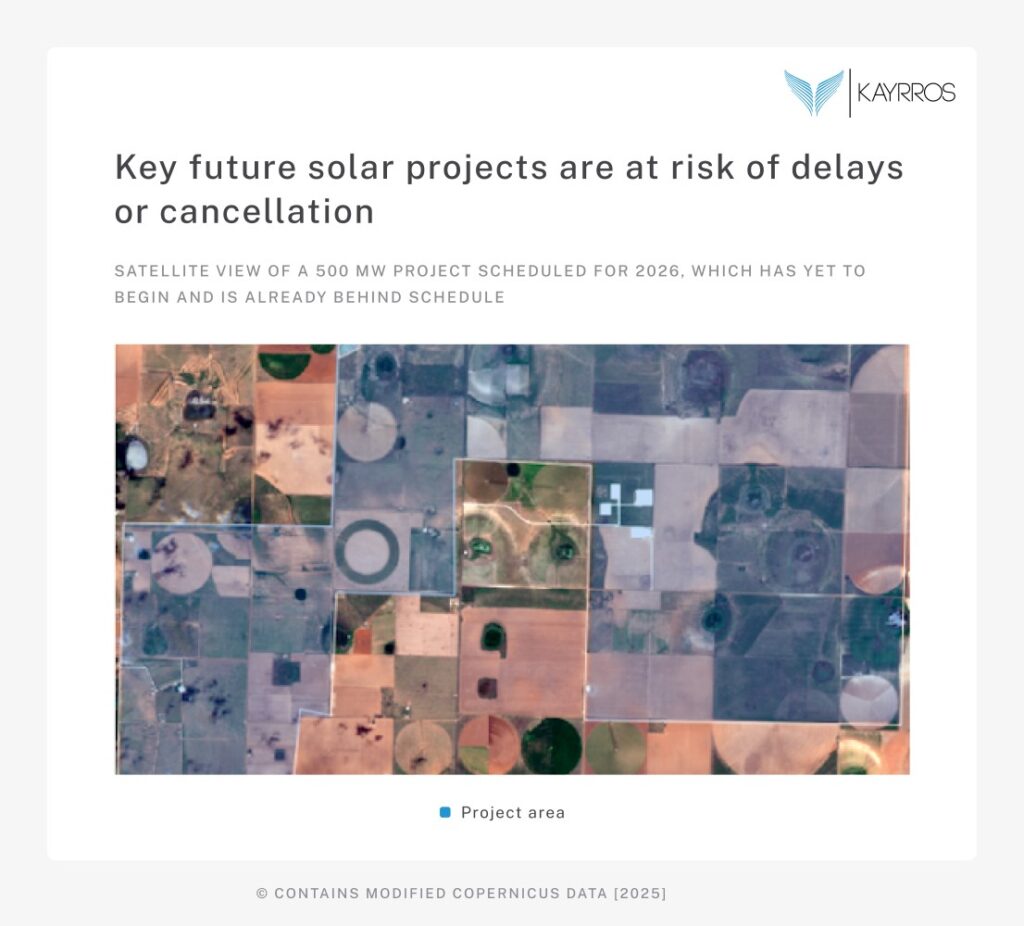
- US solar developers have stepped on the brakes, Kayrros data shows. Satellite monitoring reveals a steep decline in U.S. solar installations starting in late 2024, on track to deepen in the months ahead. The US installation rate nearly halved in January 2025 versus year-earlier levels, with a significant drop at the end of 2024.
- The solar industry started responding to expected changes in U.S. climate policy even before President Trump took office. Solar installations shifted gears immediately after the November election. New legislation, tariffs (whether potential or actual), and President Trump’s campaign against solar have since caused more headwinds for the industry and cast doubt over its near-term future.
- U.S. solar energy is at a turning point. Oil and gas majors are pulling back from renewables. Renewables leaders are delaying or reconsidering projects, putting billions in planned investments in jeopardy. Major project cancellations are expected soon, further slowing the sector’s momentum. What was once a phase of rapid expansion has given way to hesitation and instability.
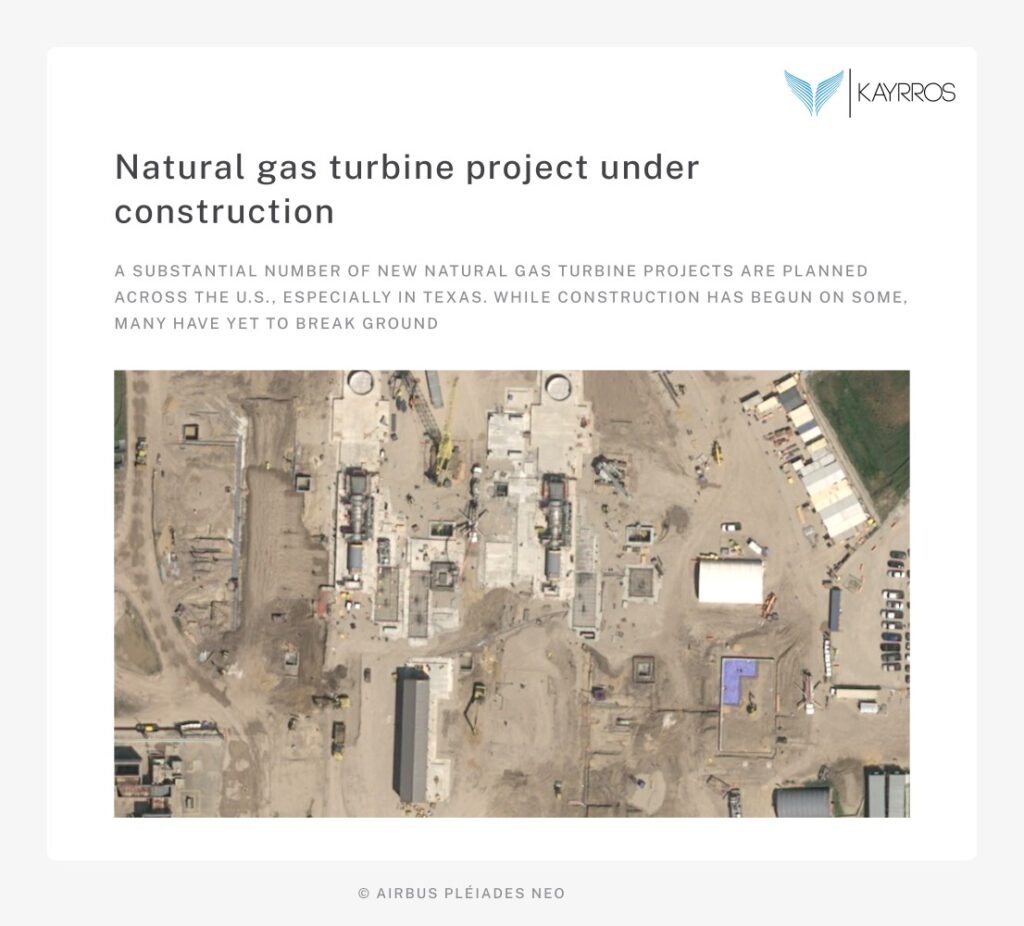
- A slowdown in solar deployment could result in electricity shortfalls, notably in ERCOT, amid soaring power demand from AI and data centers. Solar capacity additions of 30 GW — 61% of new U.S. capacity — played a key role in stabilizing the grid in 2024. With U.S. electricity demand projected to rise 25% by 2035, a reduced contribution from solar could deepen the challenge. Though natural gas is often viewed as a backup, long construction timelines limit its ability to bridge the gap in time.
- President Trump’s stance on solar energy focuses on reducing costs and shifting support to traditional fossil fuels. Trump has taken issue with solar for being costly and dependent on government subsidies, arguing that this limits its economic viability. The U.S. administration rolled back the I.R.A. while simultaneously approving new oil and gas drilling projects.
- Solar development is already slowing, satellite data shows.. By leveraging near-real-time satellite imagery to monitor every solar plant across the U.S., Kayrros provides accurate, live estimates of installation rates. Our recent analysis reveals a sharp decline in the rate of new solar installations toward the end of 2024, confirming early signs of the sector’s deceleration.
- The “One Big Beautiful Bill” will further hit solar development: The new bill fast-tracks the phase-out of federal tax incentives for utility-scale solar. To qualify for the solar tax credit, projects must be placed in service by December 31, 2027. Missing this deadline results in losing eligibility for the incentive.
- These changes will drive up project costs, tighten financing, and Kayrros estimates that could put dozens of solar developments at risk of delay or cancellation, ultimately slowing the sector’s growth. Additionally, strict new limits on materials from certain foreign entities—especially China, which currently supplies over 50% of solar panel imports—may disrupt supply chains and further increase costs.
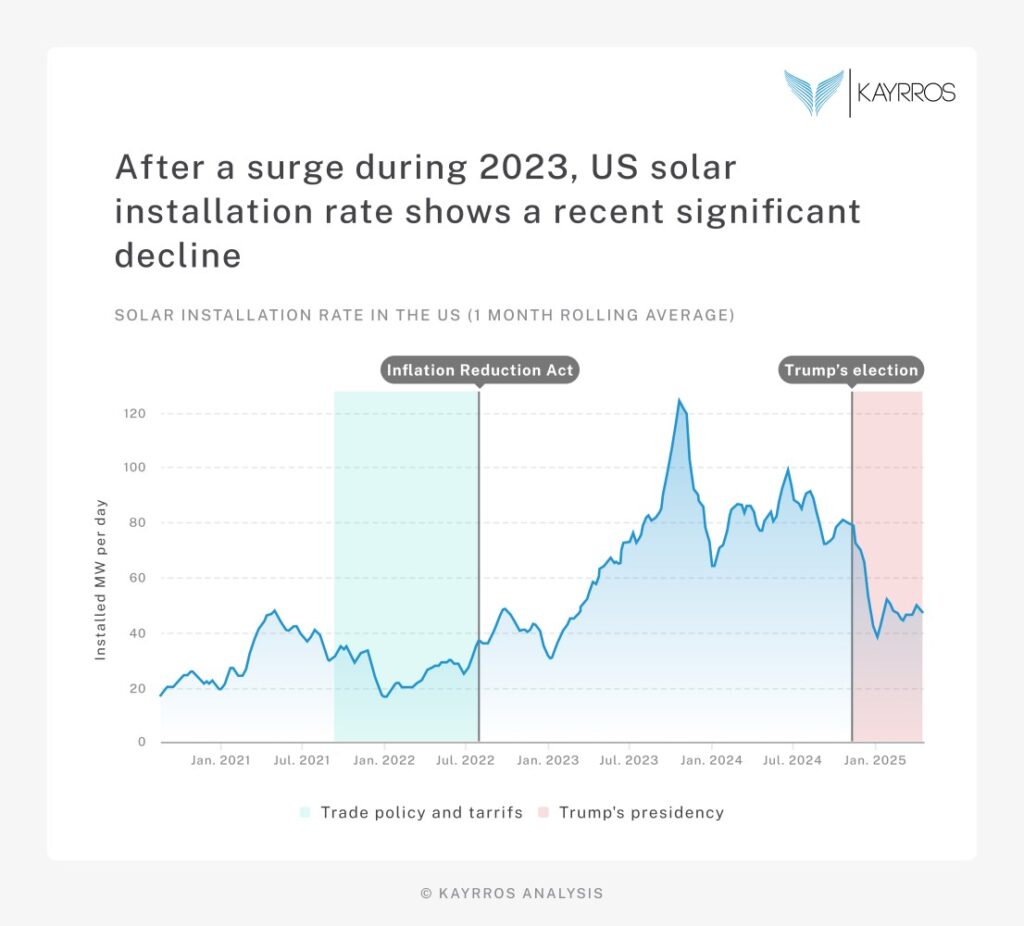
- BP, Shell, and Equinor have announced cuts in their clean energy plans, shifting investments back to oil and gas. Meanwhile, regulatory hurdles and ongoing uncertainty are causing major developers like Engie and EDP Renewables to delay or cancel projects. Together, these trends put billions of dollars in potential solar and clean energy investments at risk, signaling a key turning point for the U.S. energy market.
- A threat to grid reliability and critical climate goals looms large. With over 30 GW of new utility-scale solar capacity slated for 2025—making up the majority of new electricity additions—any delays or cancellations could strain the grid, especially as data center-driven demand soars. Meanwhile, natural gas turbines—often seen as a backup energy solution—require significant time to construct, limiting their effectiveness in quickly addressing growing energy shortfalls. Without accelerated solar deployment, the U.S. risks derailing emissions goals and compromising a cleaner, more resilient energy future.
In the news
- How the new Bill will impact renewable energy, The New York Times
- What will be the impact on the solar developers, Financial Times
- BP is refocusing on fossil fuels, dropping its renewables growth goals, Reuters
- The One Big Beautiful Bill is one big disaster for AI, Vox