


What to make of China’s crude oil stock plunge in January?
- From January 9 to February 8, China experienced one of the steepest month-long drops in onshore crude stocks ever recorded in a single region or country. Why such a plunge?
- Is it the economy? Unlikely. China’s cement, steel and electricity production didn’t show any further deterioration around the time of the stock draw, Kayrros data reveal.
- US sanctions on Russian oil announced on January 10 and self-sanctioning by Chinese ports provide a better explanation. Chinese refiners in the Northeast and Shandong province drew down their stocks as Russian oil imports took a breather.
- After four weeks of steep and steady decline, Chinese stocks started bouncing back around Feb.10. Either importers found workarounds, or concerns over enforcement eased after Pres. Trump returned to the White House and embraced Putin.
- Despite being the main buyers of Russian oil, Shandong ‘teapot’ refiners did not lead the draws.
- Takeaway #1: China’s January stock draw offers a preview of what to expect if Pres. Trump brings back his policy of “maximum pressure” on Iran. A halt in Chinese imports, if sustained, would badly hurt Tehran.
- Takeaway #2: China’s massive oil storage infrastructure constitutes a formidable strategic asset. Thanks to its vast spare storage capacity, China can easily absorb distressed barrels as it did during COVID. It also has plenty of stocks to draw on and bridge any supply gap, as it appears to have done in January.
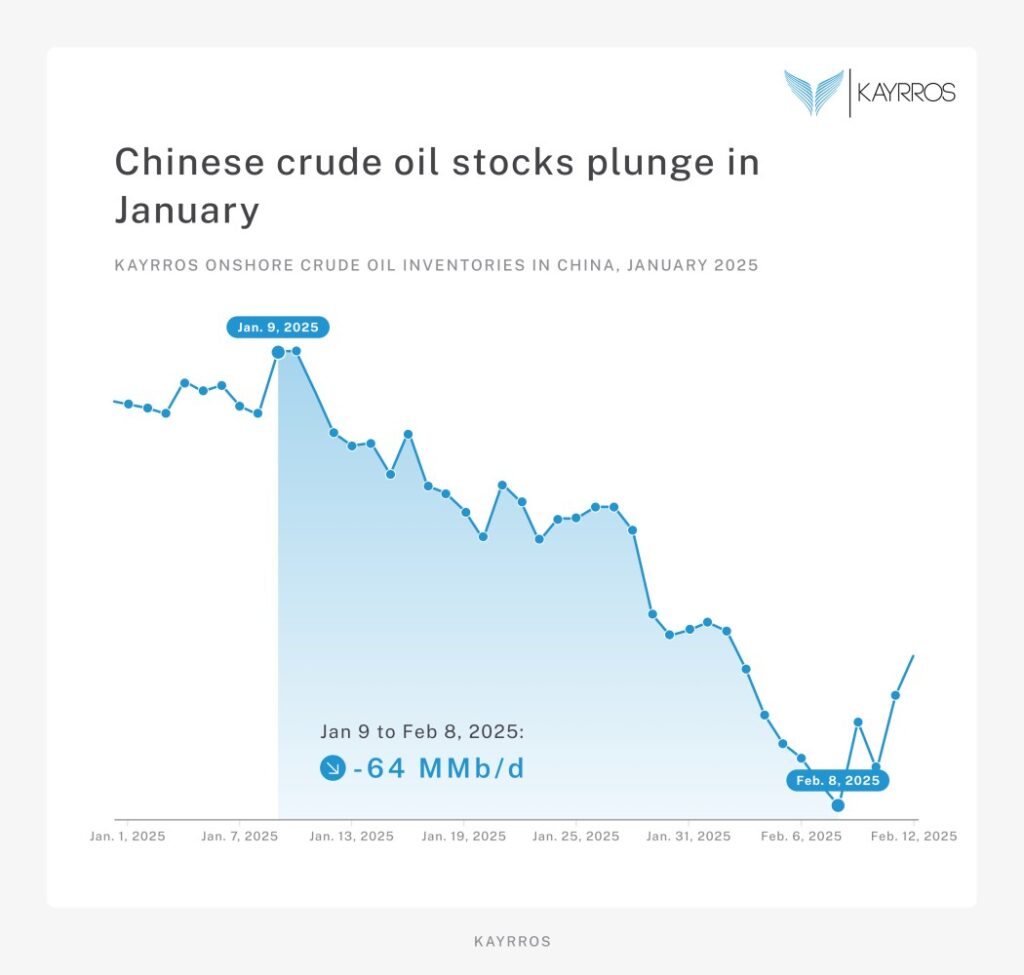
- From January 9 to February 8, 2025, Chinese onshore crude oil inventories held in above-ground tanks plunged by more than 60 million barrels, an average draw of more than 2 mb/d. This is one of the steepest continuous draws ever recorded over a one-month period in a single country or region since the start of Kayrros data in 2016.
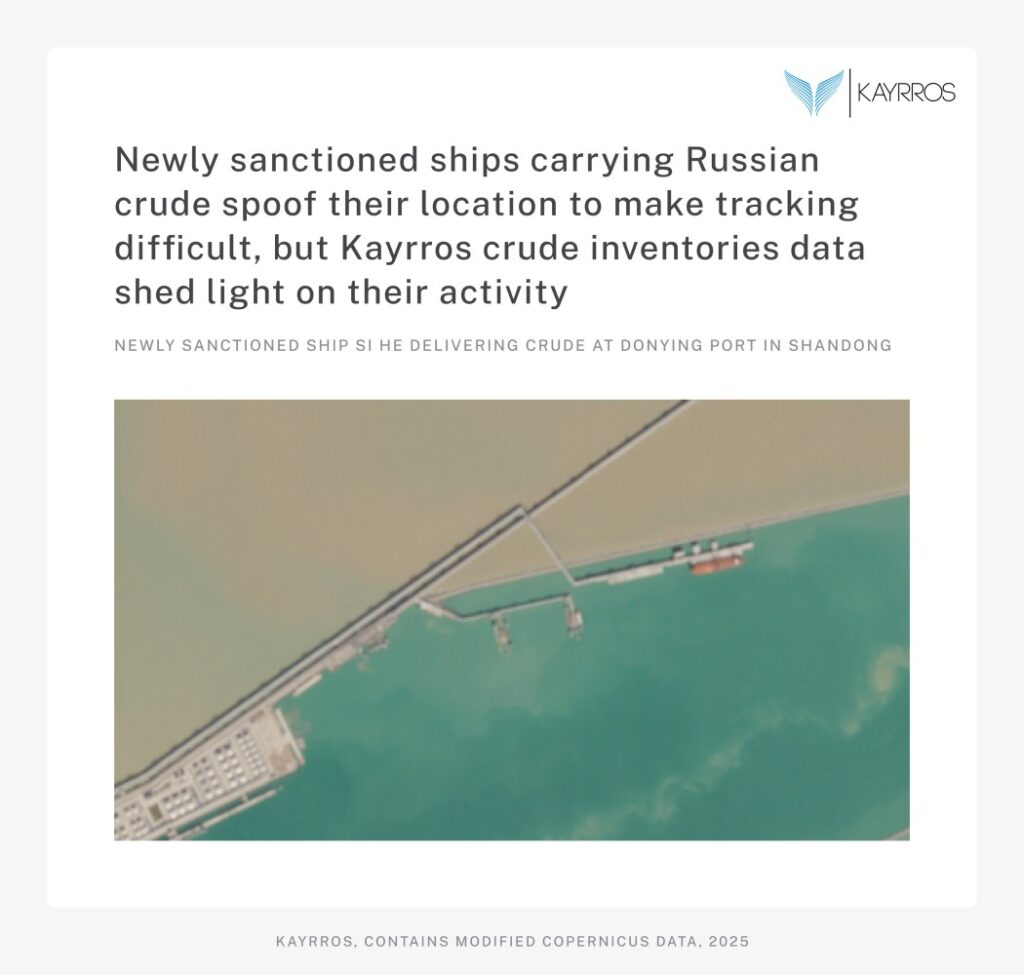
- The onset of the draw coincides with the imposition on Jan. 10 of sweeping new U.S. sanctions on the Russian energy sector by the outgoing Biden administration, including the designation of 183 tankers as part of the Russian “shadow fleet” used to service Russian oil exports outside of the price cap regime. This brought the total number of sanctioned vessels to 270–280 (totaling 2.6 mb/d of capacity). Meanwhile on Jan. 7, Shandong Port Group, operator of some of the largest ports in Shandong province, announced the ban of sanctioned tankers from its ports.
- After falling precipitously for roughly a month, overall Chinese crude stocks started bouncing back on Feb.9, building by nearly 2.3 mb/d in 10 days, and retracing nearly one third of the earlier draws.
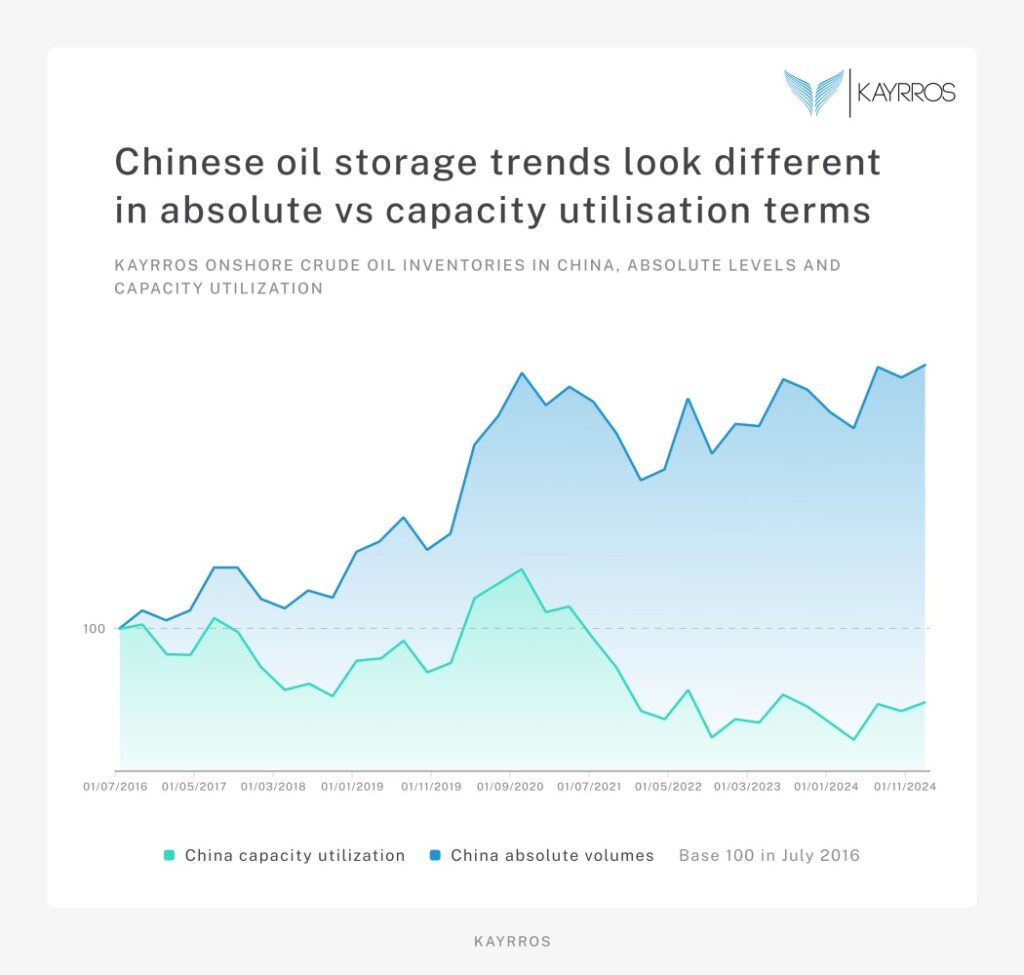
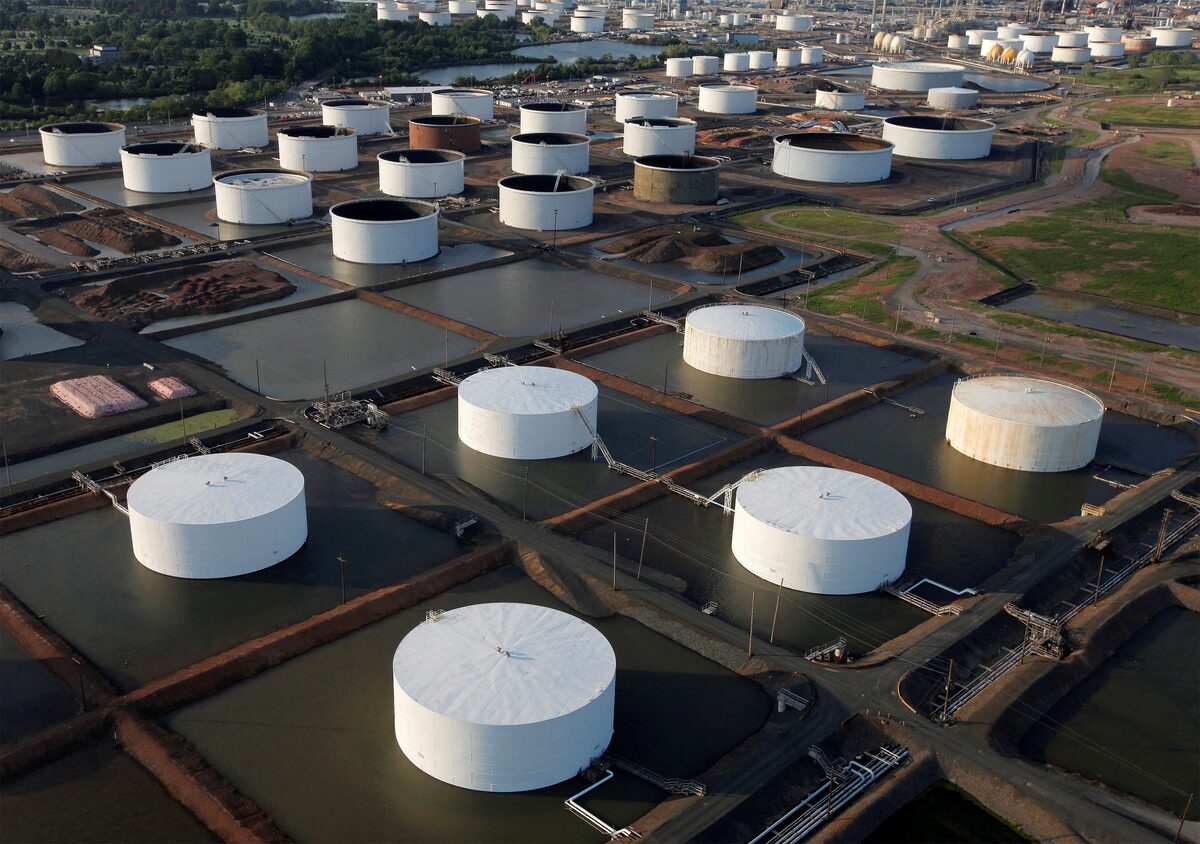
- China’s crude storage capacity has massively grown in the last 10-20 years, including very recently, and Kayrros is continuously monitoring tank construction and updating its estimate of total storage capacity, in China as well as other countries.
- This massive expansion of China’s crude storage infrastructure gives it flexibility in managing its crude supply, and remarkable sway over oil markets. Faced in part with a likely drop in Russian crude supplies in January, China made up for the shortfall by drawing on its own reserves at a pace of more than 2 mb/d for a month. Should Pres. Trump decide to resume his strategy of “maximum pressure” on Iran, China would presumably find it relatively easy to comply, at least for some time, by drawing on its own reserves to meet demand. Chinese imports have been an economic lifeline for Iran, and the latter would likely find it hard to deal without them.
- Conversely, China’s massive spare storage capacity gives it the ability to absorb large volumes of distressed barrels and puts something of a floor under the market by its ability to soak up excess production, as it did during COVID.Should Pres. Trump move to lift U.S. oil sanctions against Russia, any downward pressure on oil prices that may result from the opening of global markets to Russian barrels and the return to more efficient, pre-Ukraine invasion trade flows might be blunted by Chinese demand for storage.
In the news
- Deliveries of Russian crude to China’s independent refineries remained steady month over month in January, despite the US expanding its sanctions list and the Shandong Port Group banning sanctioned ships (S&P Global).
- The sweeping new sanctions imposed on Russia’s energy sector by the Biden administration on January 10 mark a significant shift in strategy (Columbia I SIPA).
The amount of Russian and Iranian oil held by ships has reached a multi-month high (Reuters).
A US-blocked oil tanker loaded a crude shipment in Russia’s Far East late last month. With its AIS transponder switched off, it recently docked at a port in China’s Shandong province, where services for sanctioned vessels have reportedly been banned (Lloyd’s list).